

Looking for a tasty and healthy meal? Coconut Lentil Curry is your answer! This dish brings comfort and flavor in every bite. Packed with nutrients and easy to make, it’s perfect for busy weeknights or cozy dinners. In this guide, I’ll share the key ingredients, step-by-step instructions, and valuable tips. Let’s dive into a world of vibrant spices and wholesome goodness that you can enjoy anytime!
Why I Love This Recipe
- Healthy and Nutritious: This coconut lentil curry is packed with protein and fiber from the lentils, making it a wholesome meal option.
- Rich and Creamy Flavor: The addition of coconut milk gives the curry a deliciously creamy texture and a tropical flavor that elevates the dish.
- Quick and Easy to Prepare: With a total cooking time of just 40 minutes, this recipe is perfect for busy weeknights.
- Customizable: You can easily adjust the spices and add your favorite vegetables to make this curry your own!
Ingredients
Detailed List of Ingredients
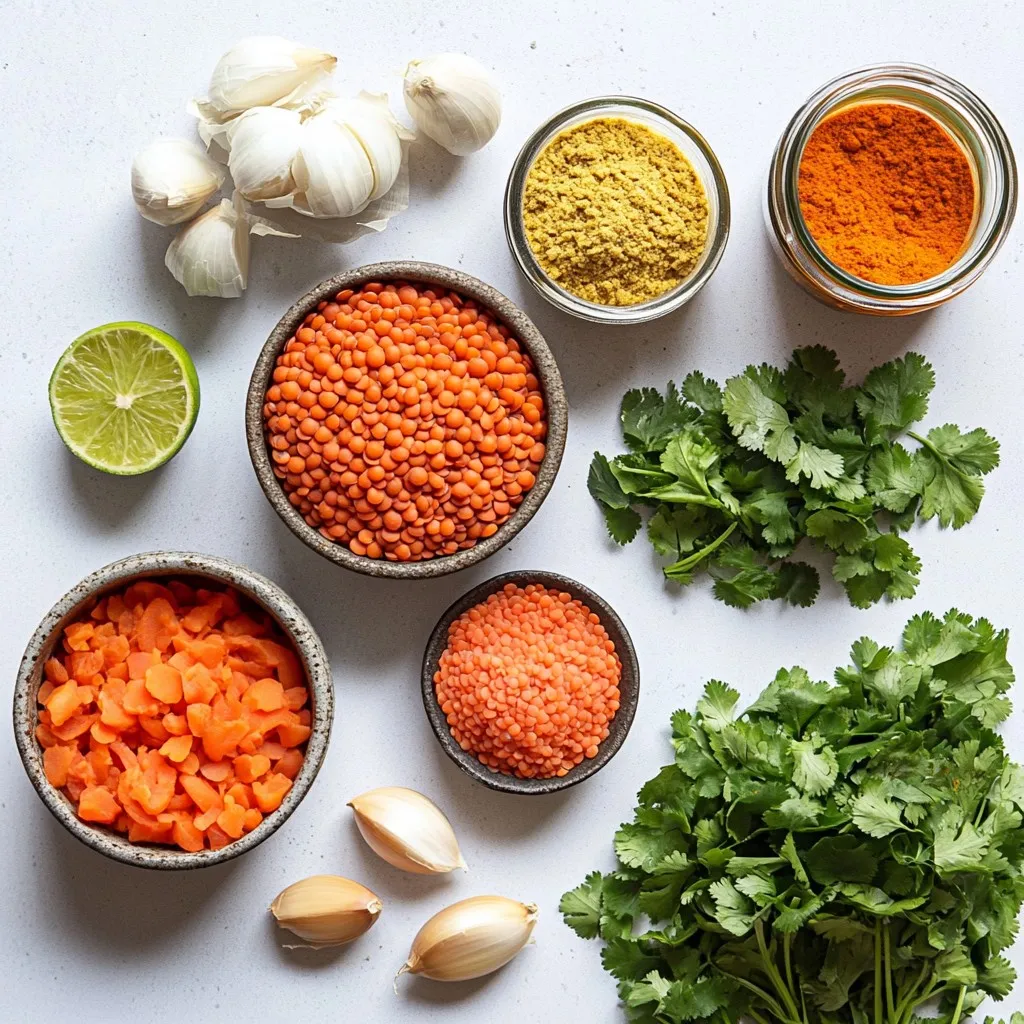
To make a tasty coconut lentil curry, gather these ingredients:
– 1 cup red lentils, rinsed
– 1 can (400ml) coconut milk
– 1 tablespoon coconut oil
– 1 onion, diced
– 3 cloves garlic, minced
– 1-inch piece of ginger, grated
– 1 tablespoon curry powder
– 1 teaspoon ground turmeric
– 1 teaspoon cumin seeds
– 1 can (400g) diced tomatoes
– 2 cups vegetable broth
– 1 cup spinach, roughly chopped
– 1 tablespoon lime juice
– Salt and pepper, to taste
– Fresh cilantro, for garnish
Measuring Tips for Precision
Measuring gives you the best results. Use a dry measuring cup for lentils. For liquids, use a liquid measuring cup. Always level off dry ingredients for accuracy. For spices, use measuring spoons. This keeps flavors consistent and your curry just right.
Suggestions for Fresh vs. Canned Ingredients
Fresh ingredients bring bright flavors. Use fresh garlic, ginger, and spinach for the best taste. Canned tomatoes and coconut milk save time. If using fresh tomatoes, chop and add them with the same amount of water. Both fresh and canned options work well, so choose what you prefer!
Step-by-Step Instructions
Sautéing Aromatics and Building Flavor
To start, grab a large pot and place it on medium heat. Add one tablespoon of coconut oil. Once the oil melts and shimmers, toss in the diced onion. Sauté it for about five minutes, stirring often. You want the onion to turn golden brown. Next, add three cloves of minced garlic and a one-inch piece of grated ginger. Cook this mix for another one to two minutes. The smell will be amazing!
Incorporating Spices for Depth
Now, it’s time to add flavor! Sprinkle in one tablespoon of curry powder, one teaspoon of ground turmeric, and one teaspoon of cumin seeds. Stir these spices for about one minute. This step helps bring out their rich flavors. You’ll notice the aroma filling the room. It’s a crucial part of making your curry shine.
Cooking Lentils to Perfection
Next, add one cup of rinsed red lentils and one can of diced tomatoes, including their juices. Mix everything well. Pour in one can of coconut milk and two cups of vegetable broth. Bring this mixture to a gentle boil. Then, lower the heat and let it simmer uncovered for 20 to 25 minutes. Stir occasionally. You want the lentils to be tender and the curry to thicken. After cooking, stir in one cup of roughly chopped spinach. Cook for another two to three minutes until the spinach wilts. Finally, finish with one tablespoon of lime juice and season with salt and pepper to taste. Enjoy the bright, flavorful dish!
Tips & Tricks
How to Enhance the Flavor Profile
To boost the taste of your Coconut Lentil Curry, try adding fresh herbs. Cilantro adds bright flavor. You can also add fresh lime zest for a citrus kick. For a deeper taste, consider using homemade vegetable broth instead of store-bought. It can make a big difference. If you want a smoky flavor, add smoked paprika. This will change the flavor in a fun way.
Cooking Tips for Texture and Consistency
For the best texture, rinse your lentils well before cooking. This removes dirt and helps them cook evenly. Stir the curry as it cooks to stop it from sticking. If the curry gets too thick, add a bit more broth. For a creamier dish, blend a small portion of the curry and stir it back in. This will give you a nice, smooth texture while keeping some lentils whole.
Common Mistakes to Avoid
One mistake to avoid is not sautéing your onions long enough. They should be golden brown to bring out their sweetness. Don’t skip the spices! Adding them early helps release their full flavor. Also, be careful with salt. Add it gradually and taste as you go. Lastly, don’t overcook the spinach. It only needs a few minutes to wilt, keeping its bright color and nutrients.
Pro Tips
- Use Fresh Spices: Fresh spices can elevate the flavor of your curry. Consider using whole spices and toasting them before grinding for maximum aroma.
- Adjust Consistency: If you prefer a thinner curry, add more vegetable broth or water gradually until you reach your desired consistency.
- Garnish Creatively: Experiment with different garnishes such as chopped peanuts, sliced red chili, or a dollop of yogurt to add texture and flavor contrast.
- Make it Ahead: This curry tastes even better the next day! Prepare it in advance and let the flavors meld together overnight in the fridge.
Variations
Vegan and Gluten-Free Modifications
This coconut lentil curry is already vegan and gluten-free. You use coconut milk and lentils, both plant-based. If you want to change things up, try adding more vegetables. Carrots, bell peppers, or zucchini work well. You can also use vegetable broth to keep it gluten-free. Just check the labels to be safe.
Adding Protein Options (e.g., Tofu, Chicken)
You can boost the protein in this curry easily. If you like tofu, press it to remove water, then cube it. Sauté the cubes until they are golden, then add them to the pot with the lentils. For meat lovers, chicken is a great choice. Cut the chicken into small pieces. Add it after the onions and cook until it’s no longer pink. This makes the dish heartier and very filling.
Spice Level Adjustments for Different Palates
You can control the heat in this dish based on your taste. If you like it mild, stick to the recipe as is. If you want more heat, add red pepper flakes or a diced chili pepper when you cook the onions. You can also serve hot sauce on the side for those who like it spicy. This way, everyone can enjoy the curry just how they like it!
Storage Info
Proper Storage Techniques
To keep your coconut lentil curry fresh, let it cool first. Then, place it in an airtight container. This helps preserve its rich taste and creamy texture. Store it in the fridge for up to four days. If you have leftovers, make sure to check for any signs of spoilage before eating.
Reheating Tips for Best Flavor
When reheating your curry, do it on the stove for the best flavor. Pour the curry into a pot and heat it over medium-low heat. Stir it often to ensure even heating. You can add a splash of vegetable broth or coconut milk if it seems too thick. This will keep it creamy and delicious.
Freezing Options for Meal Prep
Freezing is a great way to save your coconut lentil curry for later. After cooling, scoop the curry into freezer-safe containers. Make sure to leave some space at the top for expansion. You can freeze it for up to three months. To enjoy it again, thaw it overnight in the fridge and reheat it as mentioned above.
FAQs
How do I make Coconut Lentil Curry spicier?
To add heat, use fresh chili peppers. Slice them and cook with onions. You can also add a pinch of cayenne pepper or red pepper flakes. Start with a little, then taste. Adjust until it’s as spicy as you like. You might also try adding a dash of hot sauce for a different kick.
Can I substitute other types of lentils?
Yes, you can use different lentils. Brown or green lentils work well, but they take longer to cook. Red lentils break down and become creamy. If you use brown or green, adjust cooking time to about 30-40 minutes. Rinse them before adding to the pot, just like red lentils.
What can I serve with Coconut Lentil Curry?
Coconut lentil curry pairs well with rice or quinoa. You can also serve it with naan or flatbreads. A side salad with fresh vegetables adds crunch and balance. If you want something lighter, try a yogurt dip for cooling contrast. Enjoy experimenting with different pairings!
This blog covers everything you need for a great Coconut Lentil Curry. We discussed important ingredients and measuring tips. You learned step-by-step cooking instructions and how to avoid common mistakes. The variations let you adjust for different diets and tastes. Lastly, proper storage will keep your curry fresh.
With these tips, you can create a tasty curry that fits your needs. Enjoy cookin